Friday, January 13, 2012

Do you have friggatriskaidekaphobia?


Yeah, I know it sounds like a cuss word and I swear that I didn't make it up...friggatriskaidekaphobia is better known as fear of Friday the 13th and from what I can tell, a lot of folks suffer from it. I was surfing around this morning and came across an article on MSN.com discussing how retailers will lose somewhere around $800 million today simply because people are so superstitious that they won't even leave the relative safety of their homes today. (Not me, I've already been to Wally World once today.)

It seems that Friday the 13th packs a double whammy in the field of superstitions. Friday has historically been considered to be the most unlucky day of the week. Ever since the publication of The Canterbury Tales in the 14th century, many travelers have considered Friday to be the worst day of the week to begin a journey. In Christian mythology, Friday has always been seen as unlucky because Jesus was crucified on a Friday.

As far as poor 13, I think it's bad reputation comes more from its proximity to 12 than to real "bad" stuff associated with the number. Twelve has a special place in terms of numerology. There are 12 months in the year, Jesus had 12 disciples, there were 12 major Greek gods, the 12 tribes of Israel- I could go on and on. Thirteen suffers simply for being the next number in line after the great and powerful twelve.

Historically Friday the 13th hasn't always been seen as a bad day. Arguably what put this particular day on the "lock yourself up in the house" map came on Friday, October 13, 1307. On that particular Friday the 13th, King Philip IV of France decided to declare war on the famed Knights Templar. Essentially Philip was jealous of the money and power wielded by the priest/warrior group. Philip planned his power bid well. He issued orders across France that all Knights Templar were to be rounded up on October 13 on charges including idolatry, homosexuality, defacing religious relics, financial corruption and secrecy. According to Philip, "God is not pleased. We have enemies of the faith in the kingdom." The coordinated arrest worked with dozens of French Templars being rounded up and confessing to the crimes- after a lot of torture. Supposedly Philip's executioners slathered the prisoners' feet with cooking grease and then put them over an open fire. Philip gained so much power from this that Pope Clement issued similar arrest orders for the rest of the Templars in Europe.

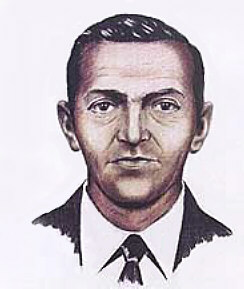
Conspiracy theorist that I am, the Templar story combined with the superstitions of Friday the 13th have made for some really interesting books to read. One interesting tome that I just finished is Steve Berry's The Templar Legacy (shown above). Thankfully for those of you who are afraid to leave home today, technology has made it where you can just download this to your Kindle and read your way through the bad day. Chin up...Saturday the 14th will be here before you know it.

Monday, December 19, 2011

Bah Humbug!


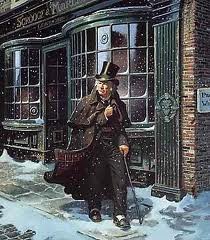
Who makes it through a Christmas season without a "Bah Humbug!" or a "God bless us every one?" Ebenezer Scrooge and Tiny Tim are just as much a part of the Christmas landscape as snowmen and Santa Clauses. We can thank Charles Dickens for putting this little jewel of a novella, A Christmas Carol, into our hands today, December 19th, in 1843. You often hear literary works referred to as "instant classics" and A Christmas Carol is the perfect example of such. When the novella hit the shelves in 1843, Dickens' publisher simply couldn't keep up with the demand; people in Britain were absolutely jonesing for the interesting little read.

One interesting part of the Christmas must-have of 1843 is that it almost wasn't published. Dickens wanted to publish a story about Christmas and actually rushed to get it written. He started it in October 1843 and put the finishing touches on it the first week of December, a mere 6 weeks of writing time (something I as a writer bow to Mr. Dickens for accomplishing). When Dickens presented the work to his publisher, they were happy to get it on the shelves before Christmas but only wanted to pay him a very small lump-sum payment. The publishers had screwed Dickens over with such an act before- only paying him an upfront amount and then making big bucks off of his works- so Dickens walked away and published the work at his own cost. A gamble? Most definitely! A success? Even more so- 6000 copies were sold between 12/19 and 12/25 at the equivalent of $20 each in today's money and then SEVEN more publication runs were sold out in less than 5 months.

So what was Charles Dickens trying to tell his readers with A Christmas Carol? Two things actually. First, it is a tale of morality and redemption. Ebenezer Scrooge is definitely a reprobate- cheats, steals, mistreats sweet little innocents like Bob Cratchett and Tiny Tim- but in the end, if he (and we by default) face up to our shortcomings and work harder, we have a second chance at the right kind of life.

Secondly, Dickens wrote this work at a time when Britain was trying to reestablish Christmas traditions. Back in 1644 (December 19th, the same day this book was published) Lord Protector Oliver Cromwell had dictated that the country could not celebrate anything associated with Christmas and in the ensuing centuries, old English traditions had simply faded away. That changed with Queen Victoria taking the throne and her husband Prince Albert blending his own German holiday traditions such as decorating and having Christmas trees in with the royal family's typical non-Christmas plans. Dickens was one of many authors at the time who truly believed that Britain would be a better place if such ideas took hold and were celebrated year after year.

In all the years since its original publication, A Christmas Carol has never been out of print. It has been adapted into plays, musicals and movies. And I would say that Mr. Dickens accomplished his goal- we have our traditions in place and A Christmas Carol is one of them. I fully agree with Tiny Tim, "God bless us every one."

Thursday, December 15, 2011

Drum roll please...final exam curves!


Are you all breathing easy yet? Or are you burning your textbooks in the backyard? (Don't do that, you can sell them on ebay for a couple of bucks at least!) Now that the 1:00 close time on the exams have come and gone it's time to reveal class averages for the test, curves and brag on the high scorers.


M/W 12:30 class-
79 average
2 point curve
And sharing high score honors are Laura and Aaron!

M/W 2:00 class-
82 average
2 point curve
Thank Sarah C. for the extra points.

T/TH 11:00 class-
80 average
3 point curve
High fives to Emily P. but even higher fives to Brittany J. for being the
only person in all of my classes to make a perfect score on the test. Great
job :)

M/W CHS 7:20 class-
93 average
1 point curve (you guys always land right there don't you?)
Bow to Megan W, curve setter

Now that you guys are done, I'm in the process of getting the grades entered so I can head out for some Christmas vacation fun with friends and family. You all have a great Christmas break and I'll see those of you who are coming back for American History II in January.

Saturday, November 19, 2011

Does one bad apple really spoil the bunch?


We've all heard the phrase, "One bad apple spoils the bunch," but where does this idea actually come from? I know it seems like a common sense thing...if you have a basket full of apples, make sure to throw away any rotten ones so they don't contaminate the good ones. But I think we all know that the literal meaning isn't necessarily what the phrase stands for.

The first known usage of the phrase is found in a list of 14th century Latin proverbs but famed English author Geoffrey Chaucer really put it on the map when he said "Better take the rotten apple from the hoard than let it lie to spoil the good ones there" in "The Cook's Tale" of The Canterbury Tales. The first American usage of the phrase is found in Poor Richard's Almanac.

By the late 19th/early 20th century in the US, it became common to use that phrase to describe the corruption in the Federal government; not everybody in the government was bad but the bad people ruined it for everyone. There was also the idea that if the one bad apple (corrupt politician) isn't removed, it will ultimately corrupt the entire bushel (the whole government).

I supposed that we can always try the "glass half full" viewpoint on this idiom if we look at it figuratively instead of applying it only to apples. Maybe a bad person will actually change his stripes and do the right thing when he sees others doing so. Call me cynical but I'm thinking not on this view.

But since it's Fall and apples are in season, make sure you look through your basket and throw away the bad ones.

Friday, November 11, 2011

Freedom isn't Free


As we sit in our own homes and live our safe and peaceful lives, it is very easy to let it slip to the back of our minds that the reason that we have this peace and freedom is because of the burden shouldered by our soldiers past and present. However, as I paraphrase the words of the great George Washington (one of the veterans we remember today) at Valley Forge, nothing is as important as the fidelity of the American soldier.

The history of Veterans Day goes back to the end of World War I. This war had been so bad that it was referred to as the "War to end all wars." At the time, people truly believed that this was the low point in modern history and we could never see another struggle so horendous (we with the benefit of hindsight know better). The official armistice, or ceasefire, of WWI occurred on the eleventh hour of the eleventh day of the eleventh month of 1918.

Beginning in November 1919, the European and American world began to honor Armistice Day as a way to remember those who had served and those who had fallen in the War to End All Wars. President Woodrow Wilson made this comment, "To us in America, the reflections of Armistice Day will be filled with solemn pride in the heroism of those who died in the country’s service and with gratitude for the victory, both because of the thing from which it has freed us and because of the opportunity it has given America to show her sympathy with peace and justice in the councils of the nations…" Our first Armistice Day celebrations included parades and a suspension of all business during the 11th hour of the day.

Over time, as the United States was involved in more wars, Armistice Day was sort of expanded. Rather than simply set aside a time to remember the veterans of WWI, the day became Remembrance Day in Europe and Veterans Day in the US to honor all the veterans of the Armed Forces.

As you wake up today and set about on your normal schedule, please take a moment to remember that freedom truly isn't free. If you have the chance, hug a veteran, shake their hand and thank them for their service to this country. Remember that it isn't just remembering those who are fighing now or those who fought in World War I. Our idea of fighting for our freedom goes all the way back to the American Revolution and gives us a grand history of the American Armed Forces.

Saturday, November 5, 2011

Remember...remember...the 5th of November


Remember, remember the fifth of November
the Gunpowder Treason and Plot.
I see no reason why the Gunpowder Treason
should ever be forgot.


If you are a movie lover or history geek like me, I'm sure you've heard this phrase or seen the mask many times. It seems to have become the it thing to do for protesters to co-opt right now. But do you understand the history behind why we should remember the 5th of November?

In 1605, England was still reeling from the religious upheavals caused by King Henry VIII's Great Matter (where he converted the country from a Catholic nation to an Anglican one with the king himself as the head of the church. All so he could get under his mistress's skirts!), Bloody Mary's execution of Protestants and the great Elizabeth's idea that there was "One Jesus Christ, the rest is all a trifle." By this point, King James I was on the throne. Yep, the one who's name is associated with the Bible. James, a staunch Protestant, believed that God had put him on the throne and therefore the only person he answered to was the Almighty Himself. All the lesser peons had no right to question any of James' decisions.

James' highhandedness led to dissent amongst the English Catholics. Robert Catesby, a Catholic from the outlying areas of England, led a group of 12 people in an attempt to rectify the situation. They planned to put barrels of gunpowder under the House of Commons (the English equivalent to our House of Representatives) and blow up the building on November 5, 1605, when King James was due to be giving a speech there. The plotters planned to put James' daughter, Princess Elizabeth, on the throne as a Catholic ruler.

OK, you know how something like this goes...somebody rats them out before the big boom can happen. An anonymous letter was sent to a high-ranking noble who called in the troops. When they searched the tunnels under the Commons, they found Guy Fawkes guarding 36 barrels of gunpowder, enough to make a BIG boom! Fawkes was arrested and the rest of the Gunpowder conspirators hauled booty. Seven of the conspirators were captured but Catesby, the ringleader, was among a group killed by the king's guard. Fawkes and the captured compatriots were sentenced to death by hanging and drawing and quartering.

Beginning the next year, the English government officially recognized November 5 as a holiday. Bells were rung, special church sermons were given, all in praise of the king and his government swiftly putting down this horrendous action planned by Catesby, Fawkes and the others. All over England, common people would burn bonfires in remembrance. English colonists brought their November 5th celebrations to the New World, often getting so rowdy with their celebrations that many were afraid to participate.

This is where the story takes a twist though. By the late 19th century, what had been a celebration of the king's actions gradually became a remembrance of the conspirators' actions, having the guts to stand up against a government they believed was mistreating them. The bells were still rung and the bonfires were lit but the effigies burned of Guy Fawkes and the others began to be honored rather than reviled. The word "guy" suddenly represented a common man. In recent years, especially since the graphic novel and movie V for Vendetta, people have begun wearing Guy Fawkes masks as a form of protesting the government. Even the tremendously popular Harry Potter series had a reference to the Gunpowder Plot- J.K. Rowling named Professor Dumbledore's phoenix "Fawkes" after Guy Fawkes.

Each year in Britain, bonfires dot the towns and countryside in honor of Guy Fawkes Day or Bonfire Day, as it's often called. People still stuff scarecrows to burn effigies, now typically representing a soccer player rather than Guy Fawkes himself. Last year's effigy was Wayne Rooney; this year it's going to be Mario Balotelli, an Italian who's playing for Manchester City.

So if you are like me, walking around the house today chanting the rhyme, you can remember why you are supposed to remember the 5th of November.

Tuesday, November 1, 2011

Happy All Saints' Day


As we all rise from our chocolate hazed over minds and scrub off the zombie makeup to begin the first day of November, it seems like just another day. One of my former students/current Facebook friends commented, "Halloween's over; get ready for Christmas." But from a historical viewpoint, November 1 is an important day also.

October 31, All Hallows Eve, might be day that the veils between the world of the living and the world of the dead are at their thinnest, allowing those who have passed over to walk among us again, but November 1 is seen as All Saints' Day. This is the day that you go to church to pray for the saints, those who spent their lives or even sacrificed their lives for the religious cause.

In 1517, the Catholic Church was so riddled with corruption that German Augustinian monk Martin Luther had had enough. He wanted to protest to the church leadership but he knew that wouldn't do him any good. Any written protest he sent to Rome would be ignored; any spoken protest might end up with him disappearing. So Martin Luther used the October 31/November 1 holidays to his advantage.

He knew that everybody partied on All Hallow's Eve. It was fun to go out and celebrate, ignoring that little bit of fear that spirits were walking the Earth that night. Luther also knew that the next day, November 1, all the party goers would be at church to pray for the saints. This was the perfect canvas for Luther to post his protests.

Before dawn on November 1, Martin Luther snuck up to the front doors of his own church, Wittenburg Cathedral, and nailed several papers to the front doors. On these papers he had listed 95 problems that he believed high-ranking church leaders needed to address. Over time, these problems have been collectively referred to as the 95 Theses.

This was such a smart move to make. Luther knew that everybody might be bleary-eyed from the night before but they would stop to read the papers at the door. And then they would start talking about what was written there. It is often extremely difficult to make changes at the top but if you can get all the people at the bottom to talk change, change happens.

In the end, Luther got the change he wanted, just not necessarily in the way he wanted. The 95 Theses actually ended up sparking a 30 year long set of religious wars that changed history forever. From Luther's ideas, the Protestant Reformation swept through Europe, splitting the Christians in two. This was what opened the door to not only Catholicism but also Protestantism in the Christian world.

Sunday, October 30, 2011

Have you ever bobbed for apples?


Part three in our Halloween tradition extravaganza is likely the most obscure of the traditions of the season. Not everybody has heard of bobbing for apples in this day and age. I think that's because this isn't necessarily the easiest thing to do. It takes plenty of space to set up a big water-filled tub, float a bag of apples inside and have room to kneel down and start chomping away. My two cents, take it for what it's worth, is that apple bobbing has sort of fallen out of fashion since we spend a lot of time, effort and money on Halloween costumes. I know I wouldn't have wanted to mess up my "Poor college professor/student who's saving money to go to France next year and just wore my regular clothes" costume.

But believe me, apples have always been a huge part of fall revelries. The apple was one of the symbols of Pomona, the Roman goddess of plenty. Her celebrations were held after the fall harvests, a time when people were partying because they had gathered all of the bounty that would get them through the winter.

As Roman mythological influence decreased in Europe, other forms of religion took hold. But the celebration of fall abundances- including apples- never went away. In Celtic Ireland and Scotland, apples were often seen as a symbol of fertility. Even though the religious influence was different, the idea of celebrating the fall bounty was still there. At Celtic fall festivals, apple bobbing became extremely important. Single folks, male and female, greedily dove into the floating apples because according to legend, if you caught an apple, you were supposed to peel it in a clockwise manner and then throw the peel over your shoulder. The shape it formed when it hit the ground would give you the initial of the person you would marry.

I have finally figured it out!!! I'm single because I've always been too worried about ruining my costume instead of practically drowning myself in the apple bobbing barrel. You better bet that next year, I'm going to be ready and waiting, covered in a fisherman's raincoat and my peeling knife in hand!

Saturday, October 29, 2011

If you don't treat, do you get tricked?


Trick or treat, smell my feet, give me something good to eat.

I remember chanting this many times as a child, excitedly putting on my Halloween costume and getting ready to go out and get the hoarde of candy my brothers and I would bring in. Since we lived way out in the country, there weren't much in terms of neighbors so we often came to one of the more established (and safer as far as my parents were concerned) neignborhoods in town to knock on doors and let strangers fill our little plastic pumpkins with all that chocolately goodness. Have you ever wondered why the other 364 days of the year, we teach our kids NOT to take candy from strangers, but it's perfectly OK on Halloween?

There is actually a historical basis for this. Centuries ago, at the stroke of midnight when October 31 became November 1, people put out food and yummy sweet goodies at their front doors. The reason for this was twofold. First, this was the time of year when everyone was beginning to wonder if they had enough food to last them through the winter season. Crops have been harvested, any food that could be canned, pickled or put in the cold cellar have been stored. But poor people who weren't in the best condition would travel around looking for handouts to help them pack on the few extra pounds to pad them up for the winter.

Secondly, this particular time period, from 10/31 to 11/2 was a time for remembering those who have passed on. If there was a time of year when the veils between the living world and the dead were at their thinnest, this was it. Restless souls could travel back into this world and harass the living. There was a real fear that the dead might burn the food storage, leading to more dead bodies by the end of winter. To head off any such "tricks" by the dead, you put out a little food on the front stoop for them. Hopefully, if it placated them, the spooks would head off to the next house looking for a treat or they would give a trick nobody wanted.

As time passed and the inate fear of the walking dead on Halloween began to fade, it became popular for children to dress up in spooky costumes and knock on peoples' doors, asking for a candy treat. At first, the costumes were supposed to be as scary as possible to make people think you were one of the spirits who had crossed back over for the night. Now it's not necessarily how scary but how cute the costume is. Some people (think older kids whose parents need to give them a good smack on the butt for acting like this) would go so far as to "trick" anybody who didn't give them a good enough treat. Those tricks might include vandalism and giving the family a big scare. Regardless of the tricks, Halloween became much more about the treats. I can imagine that most kids were like me and my brothers- you know exactly who had the best candy so you wanted to hit up that house first!

Recently, with the big push for healthier lifestyles, many folks hand out stuff like toothbrushes, fruit or other things that aren't necessarily treats. No wonder trick are on the rise! Not me! I'm going to be sitting out there on the front porch, giving out the yummiest stuff I can find- the cuter your costume, the more candy you get- and hope that the spooks don't decide to trick me.

Friday, October 28, 2011

Who was Jack?


With all the candy, costumes, parties and the like surrounding Halloween, it's really easy to get caught up in the fun and forget the fact that there's a reason why this is the scariest time of the year.

People start carving pumpkins WAY ahead of the big night. Go up and down practically any street and you'll find at least one ghoulish smile glowing back at you. There are contests to see who can carve the coolest face (my Facebook friends have posted a few examples of some really great examples of their own carvings). When I was googling to find a cute little pumpkin pic to put at the top, I found all sorts of eyecatching specimens- from a Stormtrooper (one after my own heart) to a Cylon to an amazing haunted house. But the standard is simply a grinning face. The question is... was there a real Jack?

According to Irish legends, yes there was. Sometime before the 17th century, a man called Stingy Jack was known for a lot of extremely sinful qualities. If anybody was on the Highway to Hell, it was Stingy Jack. When the Devil came to collect Jack's soul, the doomed man tricked the Devil into climbing an apple tree. Jack then nailed crosses all over the bottom of the trunk, keeping the Devil treed. Jack only let him down after the Devil promised not to take Jack to Hell for his sins. Sounds like a good deal for a bad guy right? Not exactly. When Jack finally died, he was barred from Heaven because of his sins. No Heaven, no Hell, Jack was forced to walk the earth for all of eternity. But the Devil did give Jack a single ember of hellfire to light his way. When people saw an unexplained light in the woods, they thought it was Jack walking past.

By the 17th century, people in Great Britain began carving out faces into turnips, putting a flame inside to represent Jack and his hellfire lantern. Once Irish immigrants moved to North America, they brought the tradition with them, giving it a little tweak. Pumpkins were much more common here, so they took the place of the traditional turnip (I'm thinking it had to be easier to carve a pumpkin than a turnip anyway).

The European/American tradition has stuck around. It is traditional for children seeking candy to carry a jack o' lantern to ward off Jack's spirit. If you look out the window and see a strange light go by, ask yourself, is it a kid looking for treats or is it Stingy Jack wandering around in your neighborhood?

Sunday, September 18, 2011

Anne Hutchinson- My Hero


If you are in my class this semester, we either just talked about Anne Hutchinson or will soon be talking about her (depending on which meeting time you have) and when I saw on my "This Day in History" widget that on this day in 1634, Anne arrived in Boston after her long journey from England, I figured I'd talk a little more about her story.

Anne and her husband were both staunch Puritans. They toed the religious lines- wore black, modest clothes, were in church every time the doors were opened, pointed fingers at their sinning neighbors- and actually were assumed to be saints within the community, meaning that God had predestined them for an afterlife in Heaven.

But Anne wasn't your typical Puritan woman. When she disagreed with what the town leaders were doing in terms of running the community, she spoke out. OK, that was bad because women weren't supposed to be that outspoken, but even though the mayor gave her the side-eye, they let it slide.

Then she took it too far. When Anne disagreed with some of the things the preacher said in sermon, she once again spoke up. During Bible studies she held in her home, she said that the preacher was wrong about certain things and that this was how she would have presented that information. Oh the horrors!!! A woman voicing her opinion!!! Can't have that... it might lead to anarchy or at the very least other women voicing their opinions.

Anne was brought before the town judges on charges of heresy, an offense punishible by death. Every time Anne tried to defend herself in court, she was told to keep her mouth shut, that the learned men of the bench did not need to hear the voice of a foolish female. When they found her guilty and were on the verge of sentencing her to death, a very pregnant Anne spoke her peace. You can't blame her; she had 13 kids at home and if they hung her, the baby she was carrying would die with her.

She essentially told the judges that if they hurt her, God would punish them, their community and all the generations to come. I bow to this woman!!! She spoke with such conviction that the judges still found her guilty of heresy but rather than execute her, the banished her and her family from the Massachusetts Colony. They relocated to the newly formed Rhode Island Colony.

Sadly, Anne's story from there isn't a happy one. The stresses from the trial and from the hasty move to Rhode Island took their toll on the expectant mother and she gave birth to a stillborn child on the way to Rhode Island. The judges in Massachusetts said that this was due to the fact that she was a "monster" and "a woman not fit for society."

It didn't stop there. Less than five years after building a new life in Rhode Island, Anne's husband died suddenly. Anne simply couldn't live there anymore so she relocated to the New Netherlands Colony (which is now New York; at the time it was under Dutch control). But she didn't find peace there either. A few months later, she and 5 of her children were killed in an Indian attack.

But despite her sad story, Anne Hutchinson is still one of my heroes. I love the stories of women who didn't quite fit in with the lot in life that men had given them. We need more Anne Hutchinsons in the world today.

Friday, September 16, 2011

It's the Most Wonderful Time of the Year


OK, go outside (yes, even if you are still wearing your pj's), close your eyes, take a deep breath and take in the smell of...the beginning of the fall TV season. Isn't it just wonderful?!?

This is my absolute favorite time of the year. As the oppressing heat of summer begins to fade away and we start to get the first hints of nippy fall weather I get all giddy because new TV has started. I can immerse myself into the fake lives of all the characters that I love and love to hate. Sons of Anarchy and The Vampire Diaries have both started off with a bang. And Supernatural and Nikita are yet to come. The premiere that I'm most looking forward to though is Fringe; I've gone all summer jonesing for a good Walter fix.

On top of all my returning faves, it looks like there's going to be a bunch of good newbies on the block. The Secret Circle piqued my interest and Terra Nova is looking pretty good. But the one that I have high hopes for is Ringer. Identical twins where one "dies" and the other assumes her life? A trite concept, I know, but after watching last week's pilot, I'm anxious to see where they go next. My only question as I watched was, "Hey Buffy, where's Spike?"

I have already resigned myself to the fact that things like prepping for class and writing the next chapter of the book I'm working are just simply going to have to play second fiddle to my old friend the TV right now. If I suddenly go off on tangents talking about Damon and Elena and how I wish I had an identical twin so I could fake my own death, just bear with me.

Sunday, September 11, 2011

Remembering 9/11


"Naked and starving as they are
We cannot enough admire
The incomparable Patience and Fidelity
of the Soldier."

George Washington wrote these words in his journal during the horrendous winter of 1777-78 when he and his soldiers fought to survive at Valley Forge. They are now inscribed on the monument at the campsite.

Today, over 2 centuries later, I truly believe that the same feeling applies as we remember the events of a decade ago when this country suffered from its worst attack in recent memory.

On that day, I remember sitting in my car, listening to the radio as I waited to go into the office and start the workday. I had already dropped Caitlin off at school and since traffic was lighter than normal, I had a few extra minutes to kill. When they broke into the music to tell about the first plane hitting the WTC, I ran into the office and turned on the lights and TV just in time to watch the smoke begin to plume from the 2nd tower. In my 28 years, I had never been so scared. Was it an accident? Was it the beginnings of an invasion? We just didn't know and the longer we waited, the worse the fear got. As my co-workers and I watched the footage and saw the Pentagon get hit and then the crash of Flight 93, all I could do was to pray for those who had been lost and those who were trying to help.

Today, as we remember 9/11, I am still doing the same. I pray for our country and its leaders. I pray for all of those who willingly put their lives on the line to serve in our military and keep us all safe. I pray for those who serve on a civilian level, the policemen, firemen, emergency crews who constantly put themselves in danger for us. I pray for us all as I know with all my heart that I am proud to be an American.

God bless America!

Tuesday, September 6, 2011

It's a Barbie World


Seriously, what toy has had more impact on people today than the Barbie doll? Since today is Barbie's sort of birthday I figured it was a good time to walk down memory lane and relive my Barbie playing days. The reason that I say it's her "sort of" birthday is because Barbie's debut was at a New York toy fair in March 1959 but today is actually the anniversary of Mattel putting the blonde bombshell on toy store shelves so all the little kiddies could partake in the wonderfulness that was Barbie.

Since the rise of the Feminist Movement, Barbie has gotten a lot of flack. If the perfectly proportioned Barbie is supposed to be ideal, are little girls going to grow up and starve themselves and buy some boobs so they can be ideal too? I never really bought into that, mainly because by the time I was deep into Barbie-world, they had stopped doing things like putting a weight loss guide that said "Don't Eat" and a scale set at 110 lbs in with the doll. Was Barbie supposed to be a ditz? I think this got blown out of proportion too. People hit the roof because Barbie said things like "Math class is tough!" I personally agree with her, math class IS tough, it's MATH!!! It's supposed to be tough. Did this mean that Barbie couldn't be whatever she wanted? Not so much. My Barbies were queens of the world, warrior princesses, powerful sorceresses, astronauts, doctors, teachers and mommies. Barbie could be anything which meant that I could be anything!

I did a little research on Barbie's history when I saw on my "News of the Day" that today was the first day Barbie was sold and I learned several surprising things. I knew that the original model for Barbie was a New York girl named Barbara Millicent Roberts but I didn't know that Mattel originally published a series of books based on Barbara's/Barbie's life. I think Ken was made up just so Barbie could have a boyfriend but I never knew that he actually had a last name (Carson) and when Ken and Barbie broke up (Ken severely needed a makeover and attitude adjustment) Barbie got "close" with Australian surfer Blaine. I love that, Mattel actually used the word "close" to describe their relationship.

Despite all the controversies, I personally think that Barbie has made much more of an impact on the life of young girls than anybody gives credit for. I might be a grown up now, but to this day, nothing makes me happier on Christmas morning or my birthday than to receive a Barbie in a long dress with gorgeous hair and jewelry. I think that's something I'll never grow too old for.

Thursday, August 25, 2011

Ding Dong the Witch is Dead!


No this isn't a post about the anniversary of the Wizard of Oz (which is also this week by the way) but it is another story about a crazy woman in history obsessed with blood. She and Lady Macbeth should have started a club.

Not many people have heard of Hungarian countess Elizabeth Bathory, or as she would have spelled her name "Erzsebet." For some reason, Eastern European royalty doesn't interest a lot of folks but this one is pretty...umm...interesting. Born in 1560, Elizabeth was quite a catch when she reached the ripe old age of 15. Through her mother, she was related to the King of Poland and the Duke of Transylvania. Her husband actually gave her a castle for a wedding present. At that time, Eastern Europe was engulfed in wave after wave of fighting against the Ottoman Turks and Elizabeth was left to run the castle and its 17 surrounding villages while her husband went off to war. She was well educated- even by today's standards- being able to speak at least 4 languages. She even fought for womens' rights. While she was young, people sang songs about how beautiful she was.

So with a pedigree like that why did I call her a witch???

After giving birth to 6 or 7 children and dealing with the stress of constant war with the Turks, a war which took her husband's life, Elizabeth was no longer the teenage beauty she had once been. By the time she was 40, her temper often got the better of her and one day in a fit of rage, Elizabeth backhanded a young servant girl. Blood from the girl's split lip splashed on the countess's hand and for some reason, Elizabeth thought the blood made her skin look younger.

Yep, you guessed it...all of the sudden Countess Elizabeth was hiring younger and younger maids and they kept disappearing. The strangest thing to me is that folks in Hungary didn't question this for a long time. I'm thinking that if I knew that maids kept coming up missing from Elizabeth's employ, I'm not going to let my daughter go to work for her.

Sooner or later, somebody did complain to the higher up nobles in the area and they launched an investigation. When the 1610 version of CSI showed up at Elizabeth's castle, they found one dead maid and one dying maid. Elizabeth was stringing them up by the ankles over a bathtub, slitting their throats and then bathing in their blood, hoping to regain her lost youthful beauty. It is estimated that Elizabeth did this to somewhere between 85 and 650 young girls. Even at the low end, this makes her the most prolific female serial killer in history.

Elizabeth and 4 of her closest maids- I'm guessing the ones to old to be used for bath water- were all found guilty of torturing and killing these young girls and were sentenced to death. Three of the maids had their fingers ripped off with red hot pokers before they were burned at the stake. The fourth's sentence was commuted to life imprisonment because it was determined that she was bullied into all of this by Elizabeth and the other maids.

And Elizabeth? Well, she was noble, remember, and nobility does have its privileges. The chief investigator convinced the king that killing Elizabeth might not be the best thing for public relations for the Hungarian nobility. So it was life imprisonment for her too. Elizabeth was taken to her own bedchambers, the doors and windows bricked over and only a small opening left to pass food and other things to and from the room. For 4 years, this was the countess's fate. In late August 1614, her jailors noticed that she had not made any noise for several days and when they busted into her rooms, they found her dead.

Needless to say, the stories of Elizabeth Bathory never faded away. They became the stories you told your kids to frighten them into acting right. Forget the Boogey Man, Hungary had the Blood Countess. Lump her and Transylvania's Vlad Dracula together and I'm not too sure that I really want to visit Eastern Europe!

Wednesday, August 17, 2011

And Then There Were None...


To be honest with you, there are actually very, very few true mysteries in American History. One of the most famous and my favorite mystery has to do with what happened to the Lost Colony of Roanoke.

In the years following Christopher Columbus' discovery of the New World, the other European empires were jealous of the riches Spain got from these new lands. England, under the great Queen Elizabeth I, decided to establish its own foothold in the New World far north of Spain's Central American lands. Queen Liz gave Sir Walter Raleigh a royal charter to build several settlements along the Atlantic coastline in a colony that he called Virginia in her honor (it's modern-day North Carolina but Elizabeth, the Virgin Queen, was flattered!). The first of these settlements failed but in July 1857, a group of 150 men and women under the leadership of John White settled onto Roanoke Island and began building their own little village.

Life wasn't easy for these settlers. They had to build everything from scratch. There wasn't a Home Depot nearby so to get lumber for houses and firewood, they had to cut down trees. But thankfully they did have good relations with the neighboring Croatan Indians. And even better, John White's daughter Eleanor White Dare gave birth to a daughter, Virginia, not long after the colony set up shop. Virginia Dare is the first documented Anglo-European baby born in the New World.

Unfortunately less than a year into the settlement, the people realized they needed goods from England. John White agreed to head back to Europe, knowing that it would be several months before he got back. He and the colonists made a deal; if the colonists were attacked or had to move off of Roanoke, they would carve a message in a tree to let White know where to find them. (Wouldn't you love to be the person chosen to carve the message while everybody else was fleeing from marauding Indians???)

Actually, it ended up being nearly 3 years before he was able to return to Roanoke. England was at war with Spain over the New World (and other things) and White was unable to get a ship to carry him and his supplies back to Roanoke. When he finally arrived in the colony, on his granddaughter's 3rd birthday nonetheless, he and the other sailors on the ship were shocked to find the buildings and lands of the settlement in perfect shape but no living soul to be found. To this very day, nobody knows what happened to the colonists. But there are several theories...

1. The word "Croatan" carved in the tree meant that the settlers had to leave their homes and move in with the neighboring friendly Croatans. This sounds good but when White made contact with the Croatans, none of the English settlers were found there.

2. The Croatan attacked and the settlers fled to other areas in the Virginia colony. Definitely possible. For several generations, other neighboring tribes had blue-eyed babies but when White checked nearby tribes, he found no evidence of the Roanoke settlers.

3. Disease wiped out the whole population. Personally, I don't think so. If an epidemic had hit Roanoke, White would have found graves and possibly even dead bodies in the settlement but he didn't find anything like this.

4. An Indian tribe attacked and massacred all the settlers. Again, I don't think so. White noted that he found no signs of struggle. In some of the homes, there were plates on the table. An Indian attack would not have been that clean. Even if the rest of the settlers fled, the dude carving "Croatan" in the tree would probably be there.

Regardless, the lack of evidence has made this mystery one of the favorites for American historians and students of history.

If you want my personal opinion, I think the answer is simple... the aliens got them! (Just kidding, just kidding!!!)

Tuesday, August 16, 2011

Out Damned Spot...Out I Say!


Anyone who's been through a halfway decent English class (and I can definitely say that Mrs. White's English class at Richland was so much more than decent) you have heard that particular line. If you are a senior in high school, it's so cool to say the line as Lady Macbeth slides deeper into insanity. Yes, it's cool then because you get to say a cuss word in class and nobody will get onto you for it. But as time passes, you have to wonder if any of the famous Shakespeare play is true.

The answer to that is sort of...

According to Shakespeare, Macbeth was a young Scottish noble who protected the country from an invasion by troops from Norway and Ireland. As a reward, the elderly king Duncan gives the hero a title. Witches tell Macbeth that he will become king at Duncan's death, so strong a ruler that he would only be defeated by a man not of woman born. They also tell Macbeth's friend Banquo that he (Banquo) will father a long line of kings. When Duncan visits Macbeth's castle, Lady Macbeth can't wait for the elderly king to die and make the prophecy come true so she goads her husband into killing the king so he can take the throne. Banquo doesn't quite believe the husband and wife tale that the guards did it so he definitely doesn't trust new King Macbeth. Macbeth doesn't trust Banquo either because of the prophecy and sets out to kill Banquo and his son, Fleance. He halfway accomplishes this because Fleance gets away. Lady Macbeth loses it because she thinks Duncan's blood is on her hands and she dies, most likely by suicide. The Scottish nobles turn against Macbeth and he is ultimately defeated by the young Macduff. How did Macduff win? Well, he wasn't actually "born;" he was delivered by Caesarean section.

Historically, Duncan was a very young man when he was king. So young in fact that he turned to older, more experienced men to help him rule his kingdom. One of these men was a seasoned soldier named Macbeth. Essentially, Macbeth (who already had a title, BTW) was the power behind the throne. Despite this power, Macbeth couldn't keep Duncan from entering into several ill-planned battles, including one in Macbeth's own territory in Scotland. But Macbeth still stood behind Duncan, advising him to the bitter end. Ultimately, Duncan's penchant for bad battles gets him killed in August 1040. This had nothing to do with Gruoch, Lady Macbeth, so she didn't have to wash out any damned spots. Duncan's queen and 2 young sons are forced to flee Scotland when Macbeth is named the new king. Macbeth actually rules for 17 years but it's not an easy rule. He was faced by infighting amongst his own nobles (if you know anything about Scottish history, this shouldn't come as a surprise) and invasions from England and Ireland. 17 years and 2 days after taking the throne, Macbeth loses it when Duncan's son Malcolm invades Scotland and retakes the title for himself, killing Macbeth in battle.

Where does Banquo fit into all of this? According to Scottish history, the witches' prophecy came true because King James VI (the one famous for the King James Version of the Bible) claimed that he was descended from Banquo. Lesson learned- never doubt Shakespeare's witches.

Did Lady Gruoch Macbeth commit suicide like Shakespeare insinuated? Nobody knows because she simply disappears from history once Malcolm took the throne. But you have to admit, the story is cool and even though it's been over 20 years since I was in an English class, it's still fun to wring my hands and say the line, "Out damned spot...out I say!"

Monday, August 15, 2011

Is the third time really the charm?


I've been hearing this phrase a lot lately..."Well just remember, the third time is the charm." I guess if I was British, people would be saying "Three times lucky." But this got me thinking, why is the third time of trying to do something supposed to be that magical time when the Heavens open and rays of light rain down on you as you have one of those epiphany moments when everything just comes together the way you want?

Is the number "3" considered lucky? Well, that depends on where you are. In China, that's a big fat yes. Three is a lucky number. It's a prime number; the Chinese pronounciation of "three" sounds like the pronounciation of the word "life" and since living is lucky, three is lucky; nine is evenly divided into three parts by three; in laying out your home, putting things in threes or in a triangle is very fung shui.

But this saying didn't come from China; it's a British/American saying. In World War I, doing something three times wasn't considered lucky because it might give German snipers time to see you, target you and shoot you. Plus, there was also the belief that deaths came in threes.

The saying itself comes even further back from that though. In the late 1800's, West Country sailor John Babbacombe Lee was arrested and convicted of murdering Emma Keyse. He was sentenced to death by hanging. The first time, the rope broke. The second time, the scaffold broke. The third time, I'm not sure how he did it, but bad boy John didn't die. According to English Common Law, the sentence had been carried out so a judge commuted it to life in prison. He did get out years later on parole for good behavior and lived until 1940.

I'm not really sure if I can say that the third time truly is the charm but if I'm ever sentenced to hanging, I certainly hope that the folks acting out my sentence are as good as the ones in charge of John Lee's.

How about you? Have you ever had anything in your life where you could say the third time was the charm? Tell us in the comments.

Wednesday, August 3, 2011

An August Month


My mom has always said that as you get older, the months of the year fly by faster and faster. When I was young, I rolled my eyes at this but now that I have a little age on me, I have come to realize that she is right (Mama, if you read this, yes, I said you were right about something- relish it, it might not happen again!)

Since the months do seem to fly by, it's easy not to take the time and wonder why July and August don't quite fit in with all the other months. January is named after Janus, the two-faced Roman god of choices, since January's weather can be notoriously two-faced. February comes from Februa, an annual purification ritual held during the month. March through June are named after other Roman gods and goddesses. September through December come from the Latin words for seven, eight, nine and ten respectively because back in the day, the original Roman calendar had ten months.

But July and August are different. They are named after real people- the great Julius Caesar and his nephew Octavian (who is in the pic above). Octavian might not ring a bell to you if you aren't really interested in ancient history but following the assassination of Uncle Julius, young Octavian took the bull by the horns and set out to move himself up from one of three leaders of the Roman Republic to the first leader of the Roman Empire. It wasn't easy- years of fighting big names like Marc Antony and Cleopatra- but ultimately he achieved it. Emperor Octavian just didn't have the right ring to it, so he adopted the new moniker, Augustus, which means "the revered one." Under Augustus, the Roman Empire became the strongest, most dominant entity in history (IMHP).

To honor Uncle Julius, who despite modern popular belief was well-beloved by the people of Rome, Augustus decreed that Quintilis, the month of Julius' birth would forever be renamed July in his honor.

Many years later, the Roman Senate decided that since Augustus was so revered by the people that he was seen as a god amongst men, he also needed a month named in his honor. Popular belief says that Augustus himself chose the month of Sextilis because it fell after July and that he ordered days removed from February to make Sextilis have the same number of days as July (Unc can't have more days than Augie!). However, this is not true. The month of Sextilis has always had 31 days just like July. Sextilis was chosen simply because many of Augustus' greatest victories, especially the fall of Alexandria, Egypt, came in that month. To honor the man and all his accomplishments, Sextilis became August.

So as you spend the next few days battling 100+ degree weather, stay cool by finding an air conditioned spot in your local bookstore and learn a little more about why Julius and Augustus Caesar are such interesting men in history. They are definitely 2 of my faves!

Monday, August 1, 2011

Who is D.B. Cooper?


Conspiracy theorist that I am, it's surprising that I had never heard of the infamous D.B. Cooper until a few years ago when he was a character in Prison Break. The guy playing him (who also played Gibbs' mentor on NCIS btw) piqued my interest enough that I did a little Wiki research back then.

In November 1971, a fairly average looking white guy in a suit and tie boarded a Boeing 727 in Portland, OR, carrying a black briefcase. After take-off, he waved a flight attendant over and handed her a note telling her that the briefcase contained a bomb and he was hijacking the plane. The plane was to land in Seattle, WA, for refueling where he wanted $200,000 in unmarked bills and several parachutes waiting for him. Otherwise, he'd blow up the plane.

The FBI complied with his wishes and Cooper released the planes passengers but took off in the newly refuled plane with the flight crew. Over the Oregon-California border, the plane experienced a pressure loss and was forced to make a quick landing. The plane was searched by the FBI but Cooper, 2 of the parachutes and the bag o' cash were gone. Most likely, the pressure loss occurred because of Cooper opening the door and jumping. I'm assuming that since none of the crew noticed the open door, it shut on its own after he jumped. Either that or they were hitting the little liquor bottles.

Although the FBI thought that Cooper probably got killed during the jump, they did launch a manhunt. The "unmarked" bills weren't quite so unmarked. They all had "L" designations which would allow them to be tracked. Despite all the tips, leads and sightings received over the years, no trace of Cooper or the money has ever turned up. All of the folks (including a woman who had undergone gender reassignment surgery a few years before) suspected to be Cooper were exonerated.

To this day, the D.B. Cooper case is considered to be the only unsolved hijacking in American aviation history and is one of those cases that just keeps investigators scratching their heads, even 40 years after the fact.

Yesterday, the FBI announced that it was reopening the case because new evidence has been discovered, pointing to a completely new suspect. Maybe after all these years, the mystery will be solved.

All I have to say about this is that if the guy from Prison Break really was D.B. Cooper, I'm jealous because he got to spend a lot of quality time with Wentworth Miller ;)